
-
×
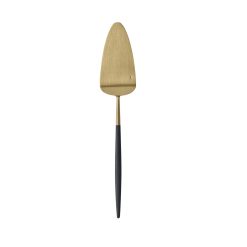 GOA Black-Gold Cake Spatula
1 × 545,00 kr
GOA Black-Gold Cake Spatula
1 × 545,00 kr
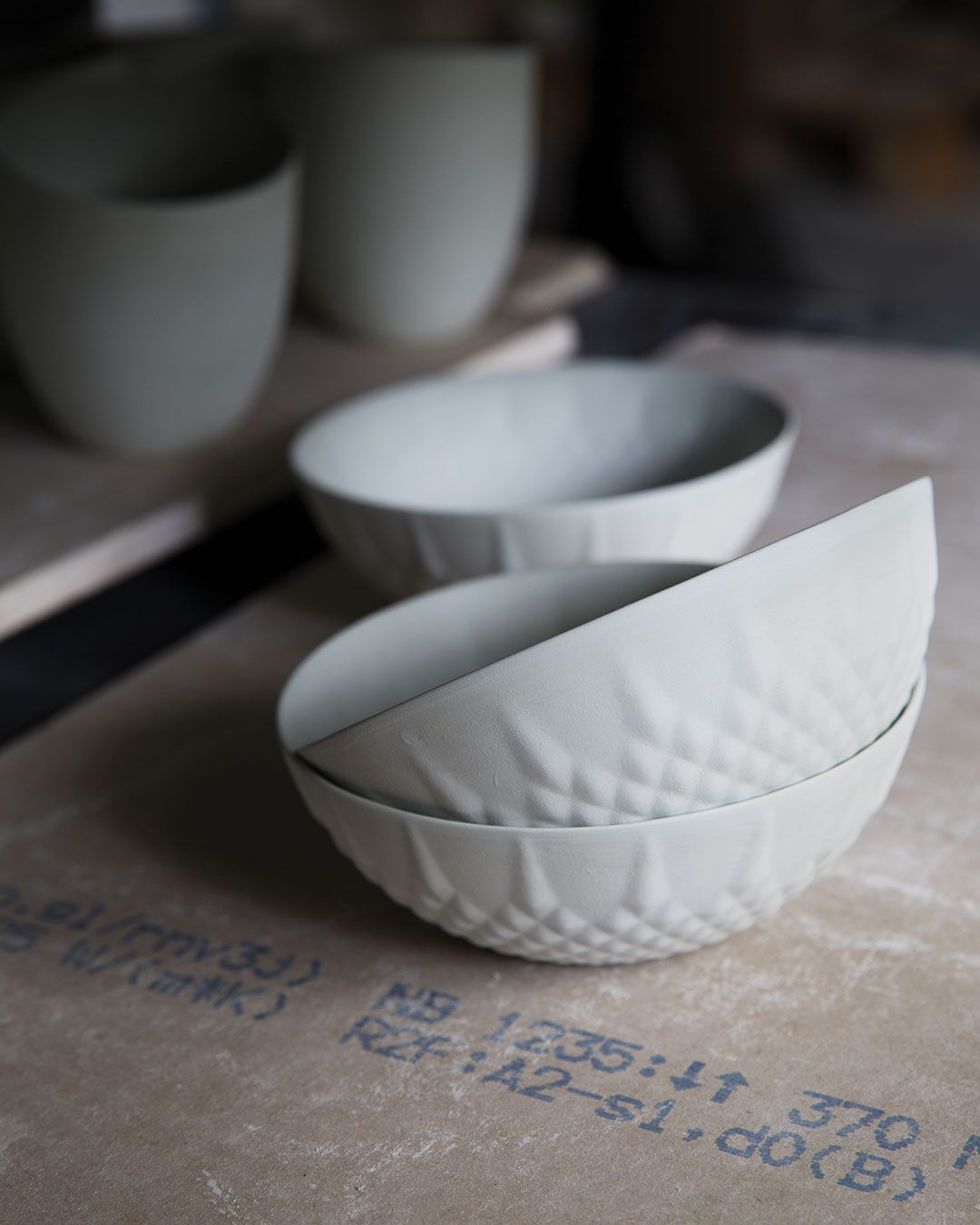
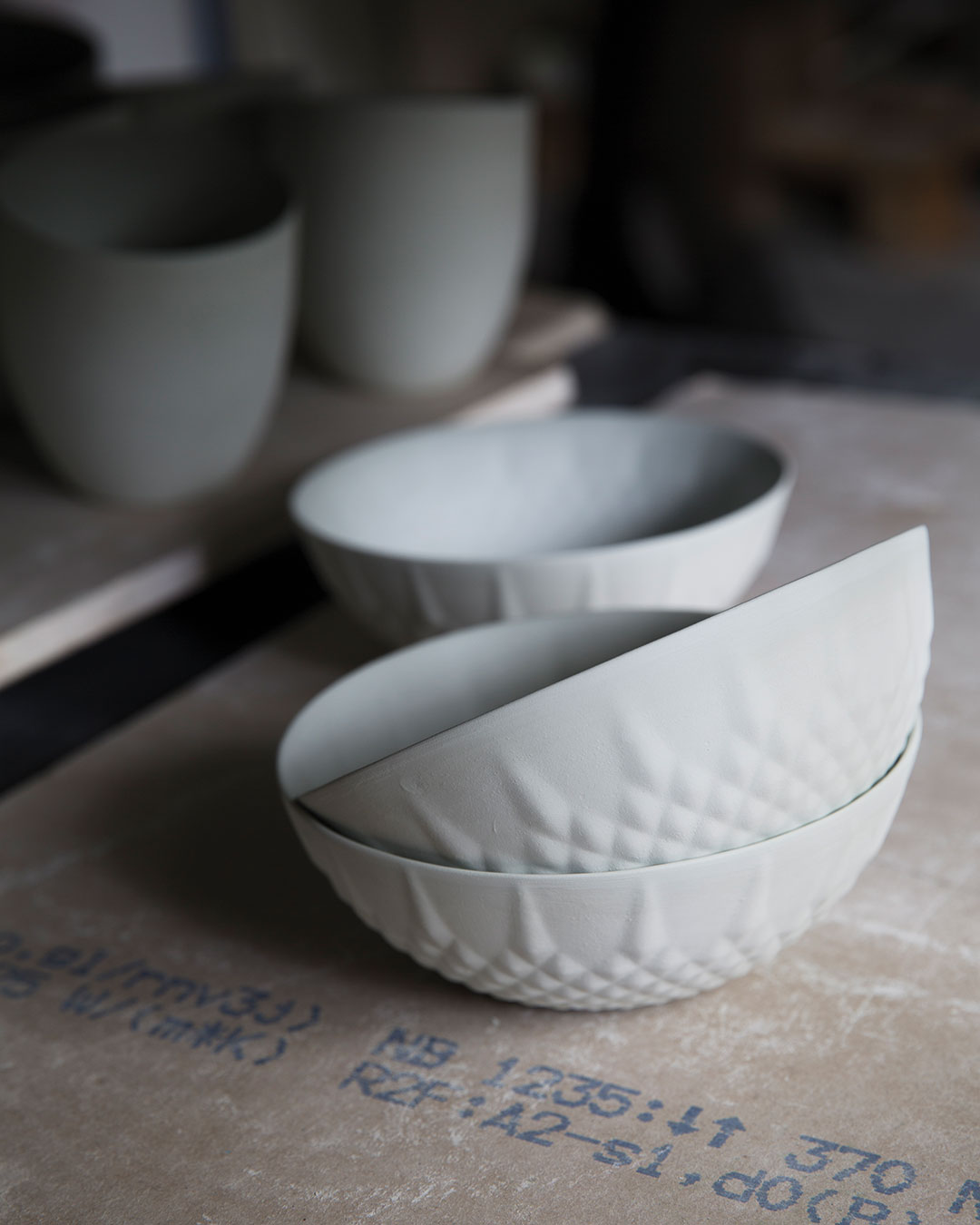
This is how we make our products
IDEA - DEVELOPMENT - CASTING - MOLDING - BISQUE FIRE - GLAZING - GLAZE FIRE - POLISH - QUALITY CHECK
Our answer is our most important goal is to make our industry more sustainable - at the same time as we want to offer our customers products that are both for pleasure and benefit - also for future generations. Intended to be a counterpart and the sustainable alternative to the use and throw away products.2021 is the starting point for our new business strategy. Sustainability is now fully integrated throughout our value chain. Our sustainability efforts must be carried out in two perspectives: what is completely natural to do - and what develops and renews our business for the benefit of society and ourselves.
We have been tough in our prioritization of sustainability goals. Ment's business affects the environment, but our promise is that we will always go further to reduce the negative consequences of our business. Therefore, we have prioritized sustainability measures that will give us the impetus to develop better and more sustainable solutions than what exists today. We recognize that a suitably large company on Fåberg probably does not make the biggest contribution to a green shift - but at the same time we are large and ambitious enough that we dare to take the lead - and prove that it is possible to combine sustainability and profitable business.
PRODUCT DEVELOPMENT
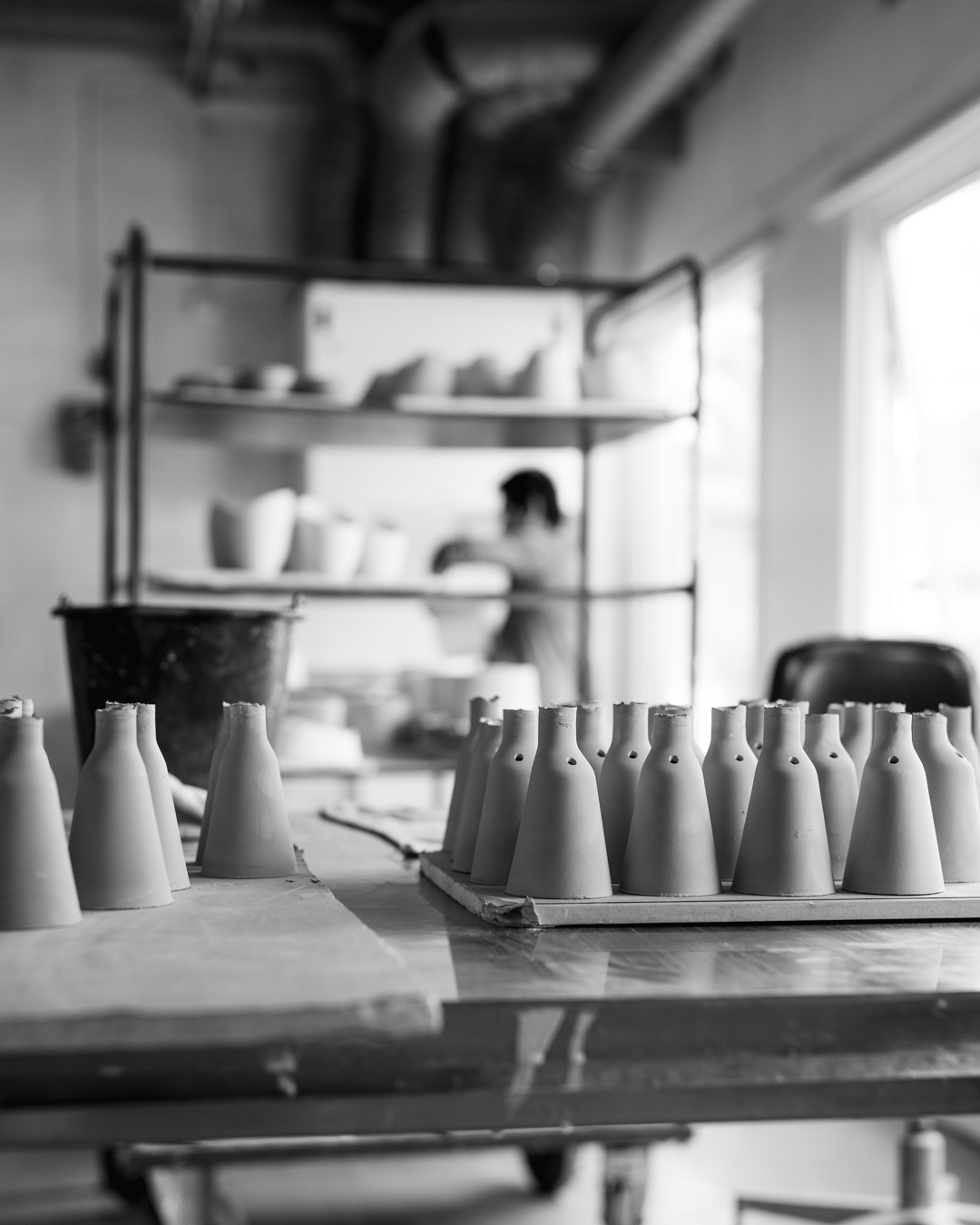
Developing a new intended product starts on the drawing board. Everything we make is born at Fåberg, that is, the entire process from idea and design, to the development of the model, mould, color and several rounds of product tests and quality control, before it can finally be put into production. The process from casting
to finished product takes 7 days.
PRODUCT DEVELOPMENT
Developing a new intended product starts on the drawing board. Everything we make is born at Fåberg, that is, the entire process from idea and design, to the development of the model, mould, color and several rounds of product tests and quality control, before it can finally be put into production. The process from casting
to finished product takes 7 days.
PRODUCTION TOOLS
When the model is ready, production tools must be developed and produced.
If the form is complicated, the production forms must be multi-part.
Production tools for casting are made of plaster.
PRODUCTION TOOLS
When the model is ready, production tools must be developed and produced.
If the form is complicated, the production forms must be multi-part.
Production tools for casting are made of plaster.
COLOUR
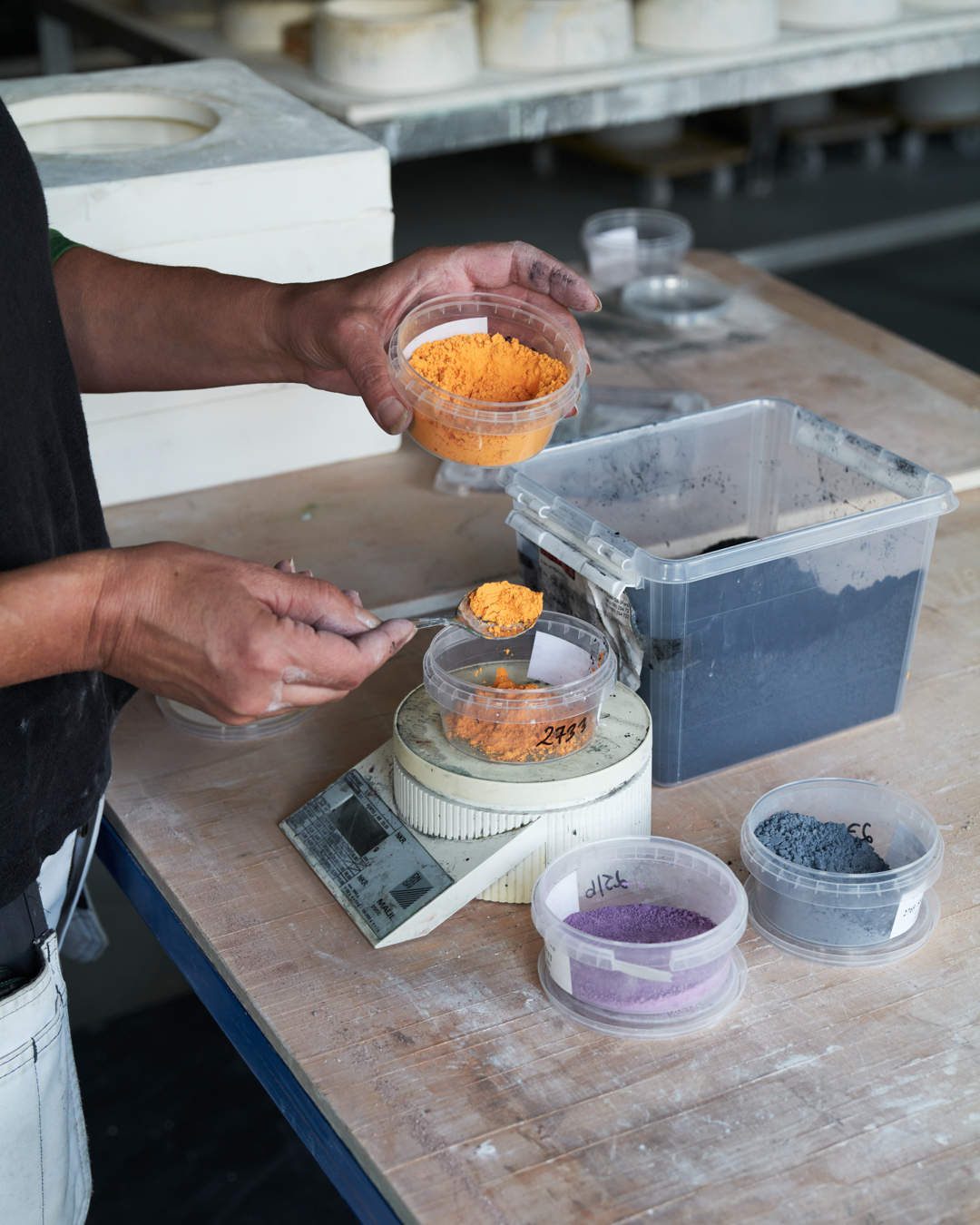
We develop our own color recipes, based on color pigments and natural minerals. Our colors are inspired by the colors in nature and almost all of them have some black pigments in the recipe. The colors have slightly different shades and marbling, which is affected by temperature and small changes throughout the production process, just like in nature. Through-colored porcelain means that the color is mixed directly into the porcelain material and glazed with a transparent glaze. This allows for both matte and glossy surfaces. Color marbling occurs because the color is mixed into the porcelain material itself.
COLOUR
We develop our own color recipes, based on color pigments and natural minerals. Our colors are inspired by the colors in nature and almost all of them have some black pigments in the recipe. The colors have slightly different shades and marbling, which is affected by temperature and small changes throughout the production process, just like in nature.
Through-dyed porcelain means that the color is mixed directly into the porcelain material and glazed with a transparent glaze. It gives the option of both matte and glossy surfaces. Color marbling occurs because the color is mixed into the porcelain material itself.
CAST
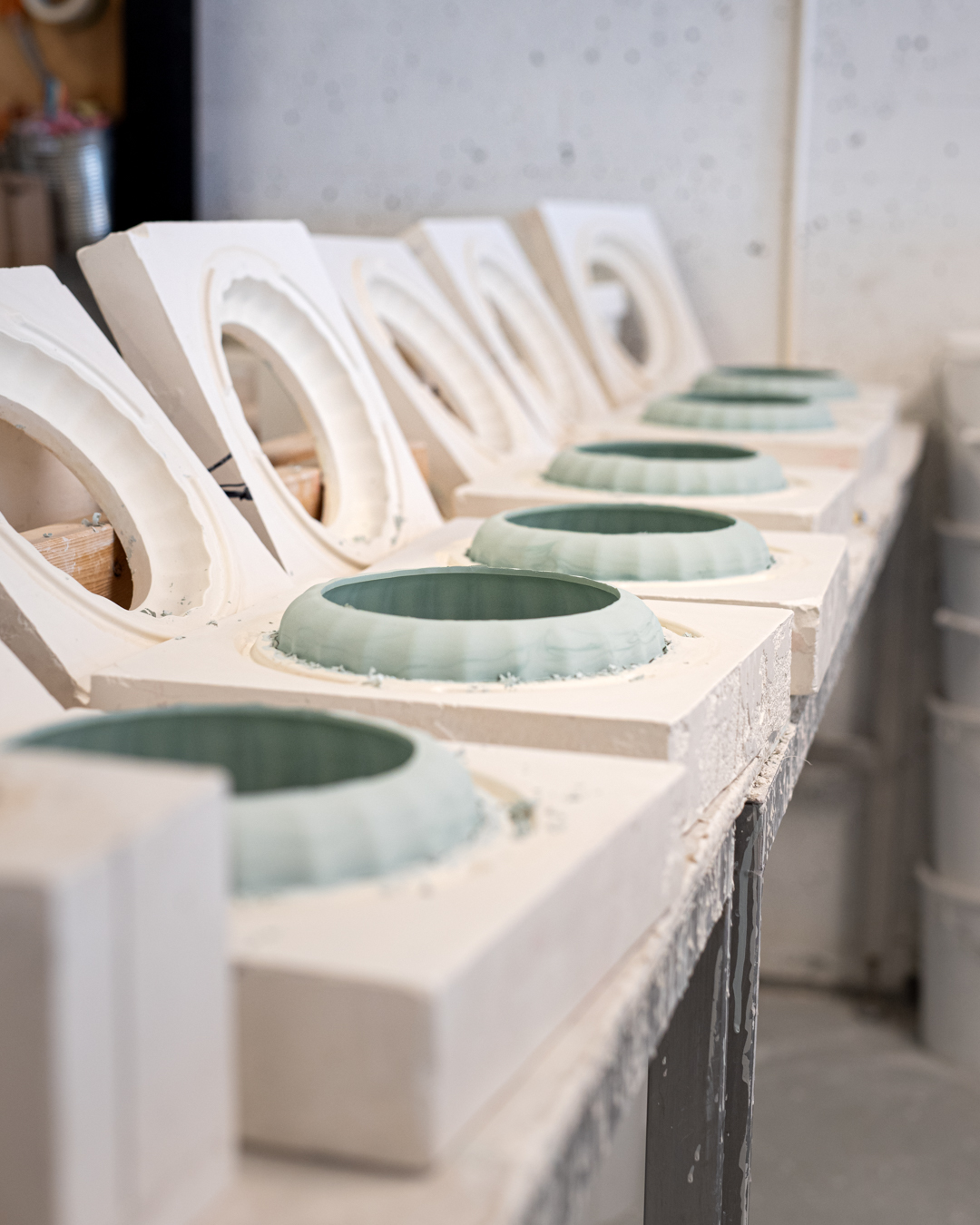
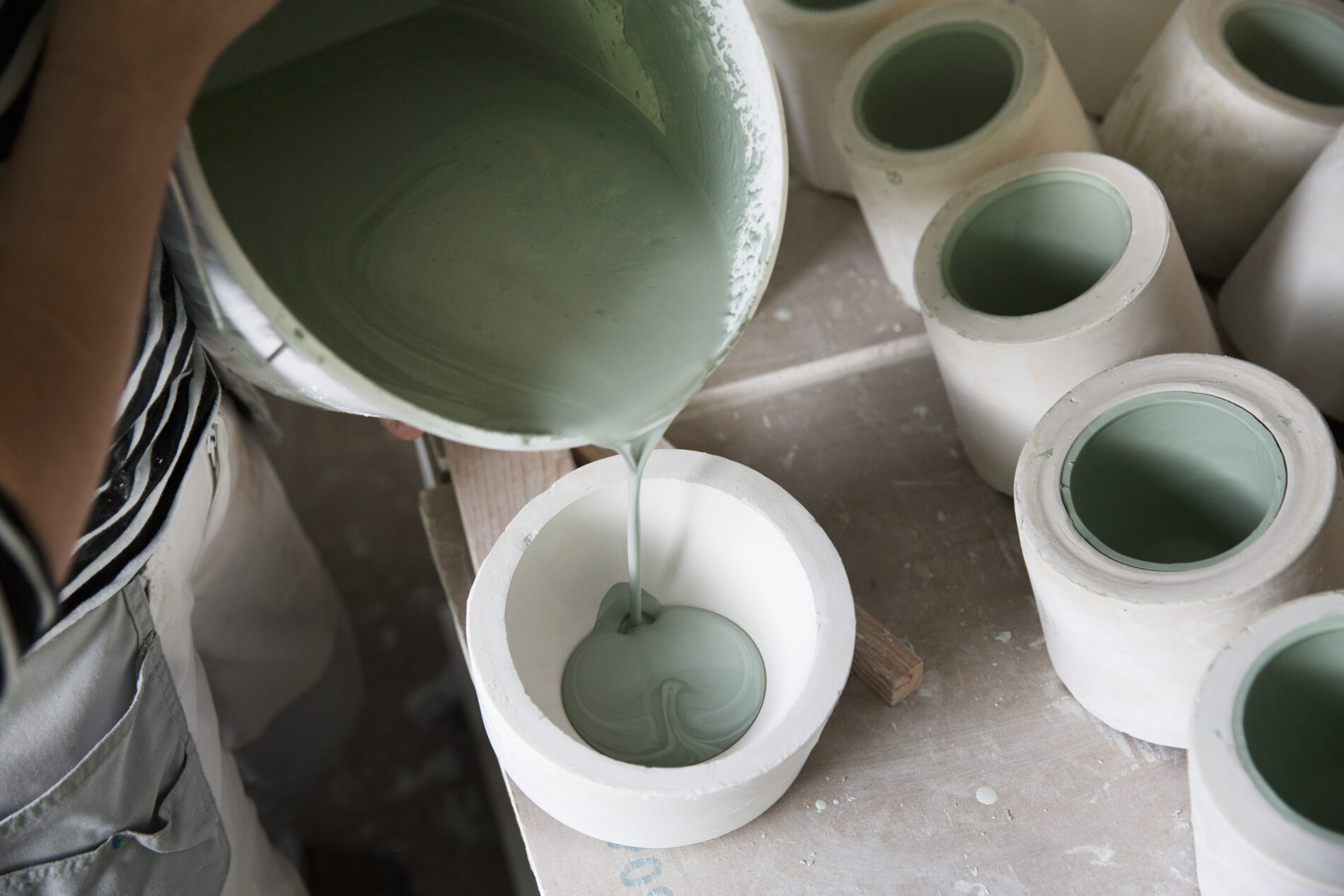
After the color recipe has been mixed, this is stirred into the white porcelain mass. It is important that the thickness of the mass is exactly right, and the flow rate is measured carefully. The plaster in the production molds draws moisture from the porcelain mass, and the longer it is left in the mold, the thicker it becomes. We have to follow up so that the products are just the right thickness. It is not just the number of minutes, but also the temperature in the room and the moisture level in the mold itself that determine how long the porcelain mass stays in the mold. Therefore, our products will vary in thickness.
CAST
After the color recipe has been mixed, this is stirred into the white porcelain mass. It is important that the thickness of the mass is exactly right, and the flow rate is measured carefully. The plaster in the production forms draws moisture from the porcelain mass and the longer it is left in the form, the thicker it becomes. We have to follow up so that the products are just the right thickness. It is not just the number of minutes, but also the temperature in the room and the moisture level in the mold itself that determine how long the porcelain mass stays in the mold. Therefore, our products will vary in thickness.
FORM
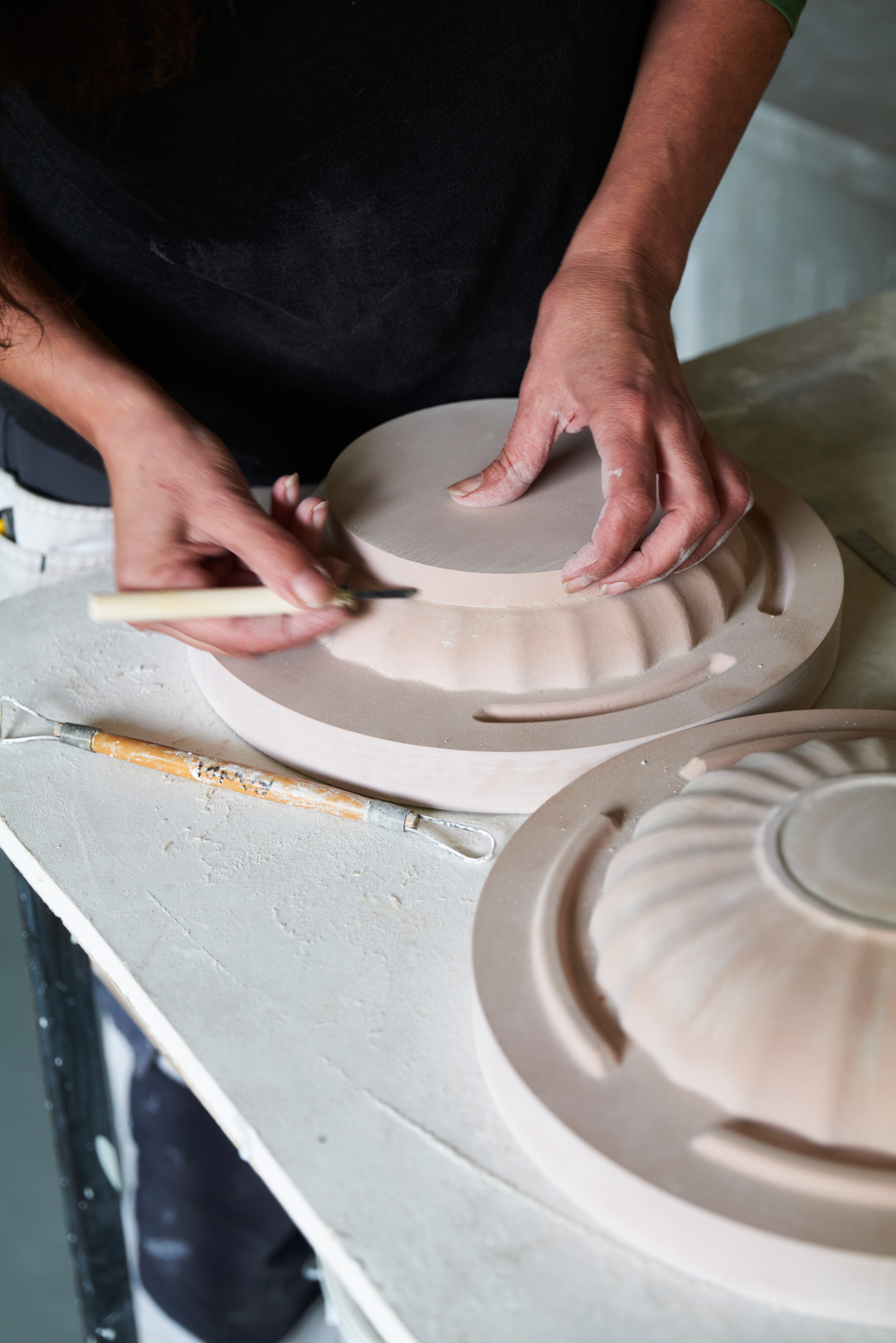
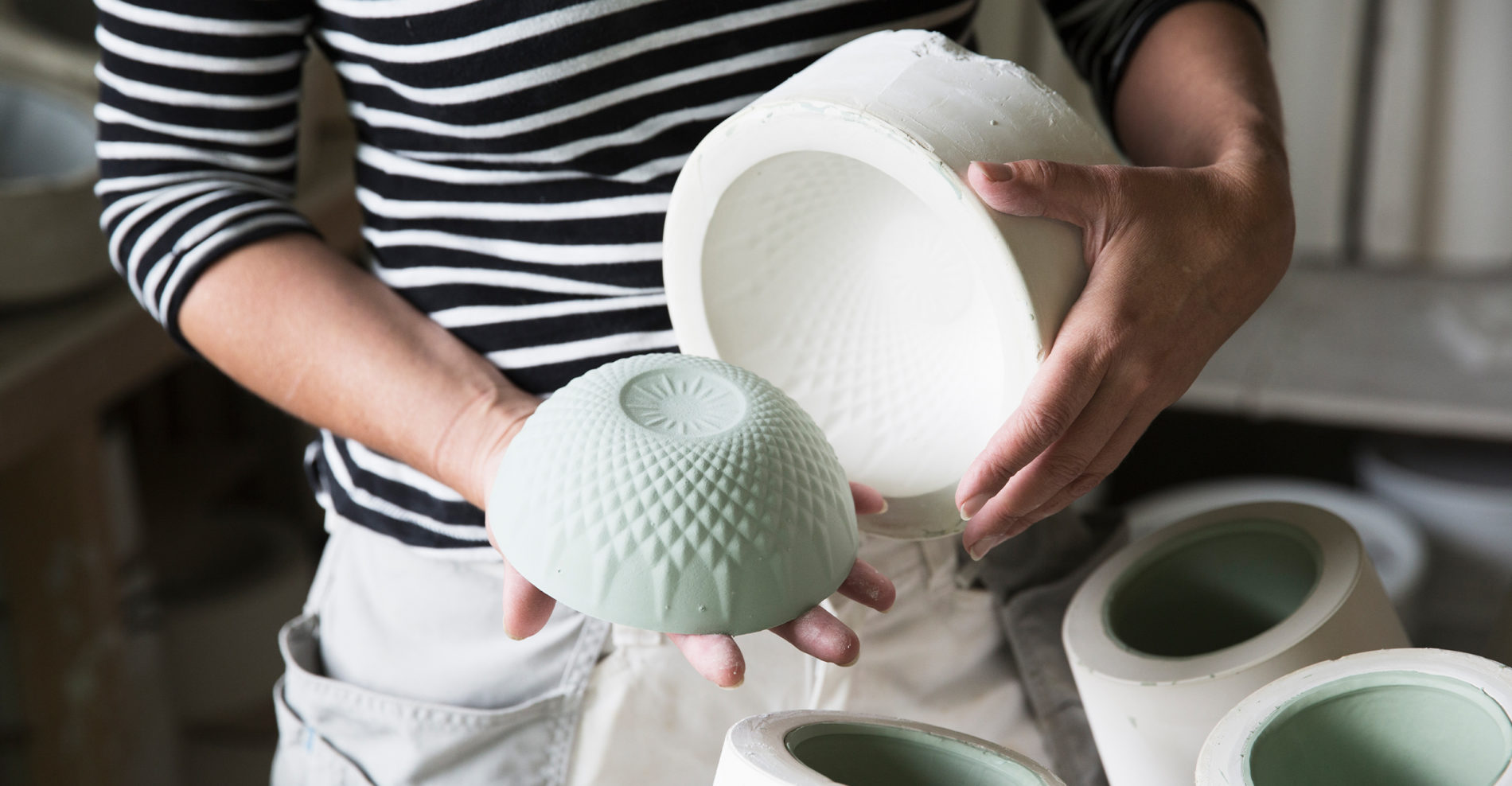
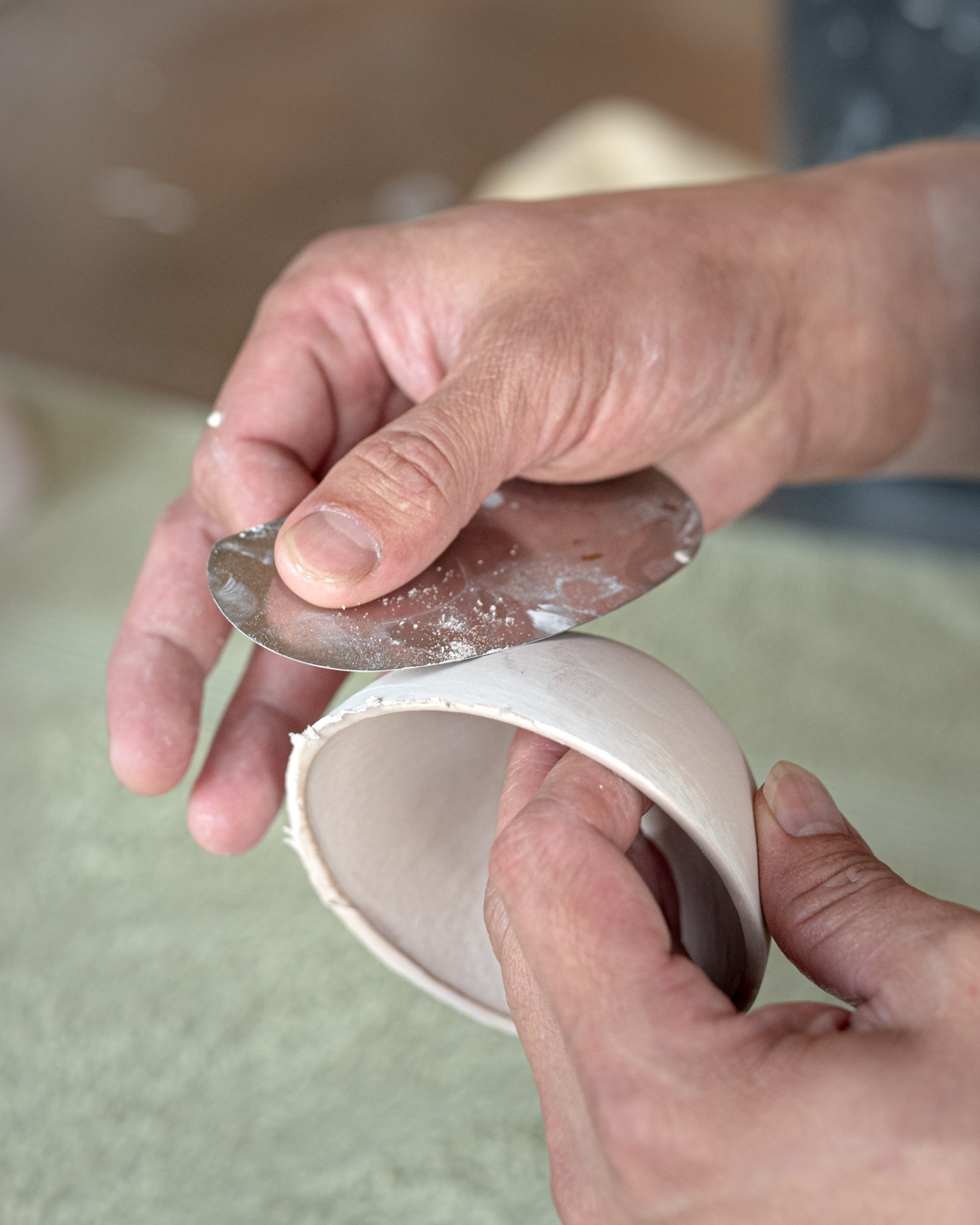
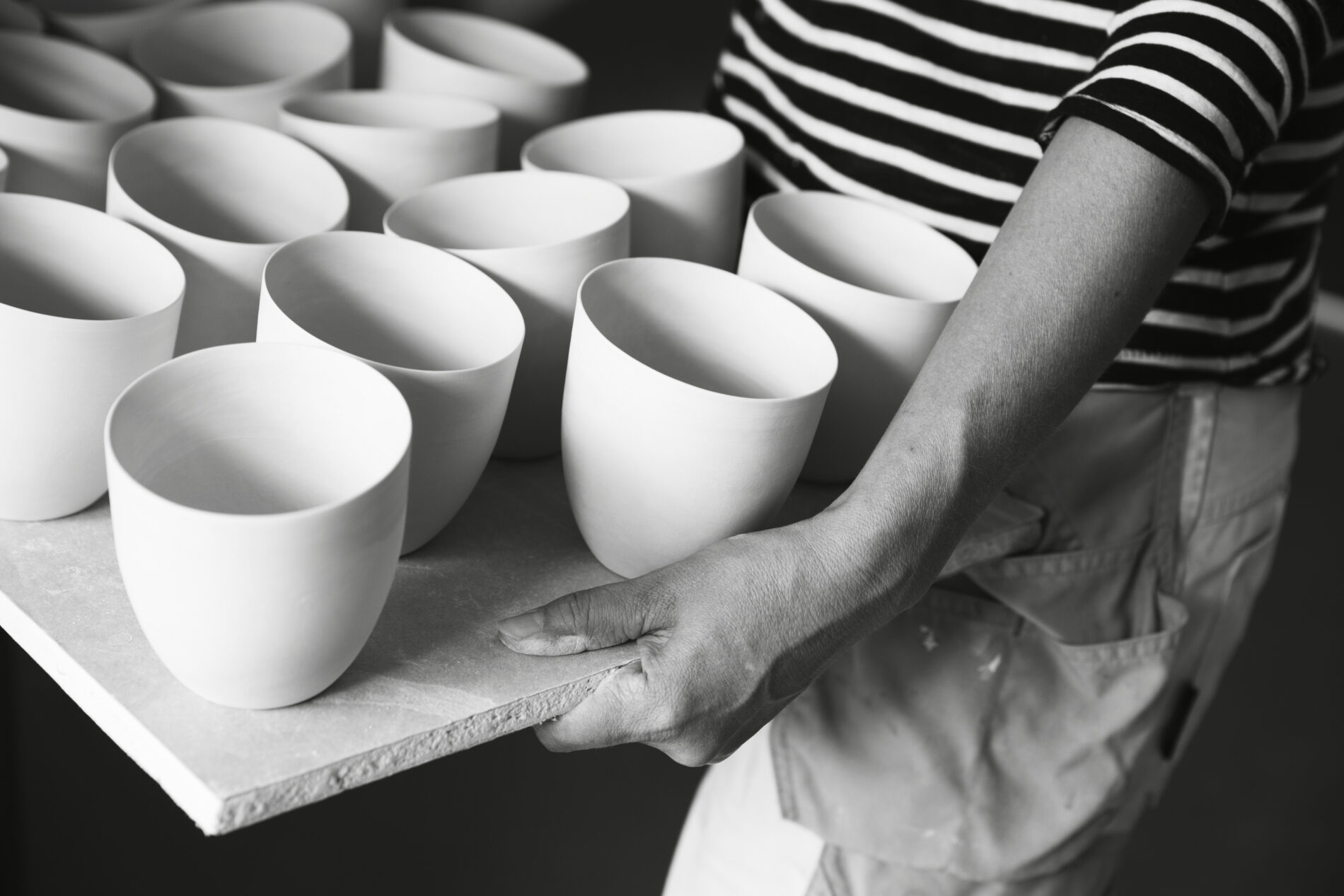
When the products have been released from the mould, have undergone the first quality control and are completely dry, it is time to process the surfaces and edges. Each and every product has its own standard and must be processed by hand by extremely skilled craftsmen. At this stage, the product cannot withstand shock or pressure, so here you have to be light on your hands and focused in your work. Every single product goes through strict quality control before it goes any further.
FORM
When the products have been released from the mould, have undergone the first quality control and are completely dry, it is time to process the surfaces and edges. Each and every product has its own standard and must be processed by hand by extremely skilled craftsmen. At this stage, the product cannot withstand shock or pressure, so here you have to be light on your hands and focused in your work. Every single product goes through strict quality control before it goes any further.
BISQUE FIRE
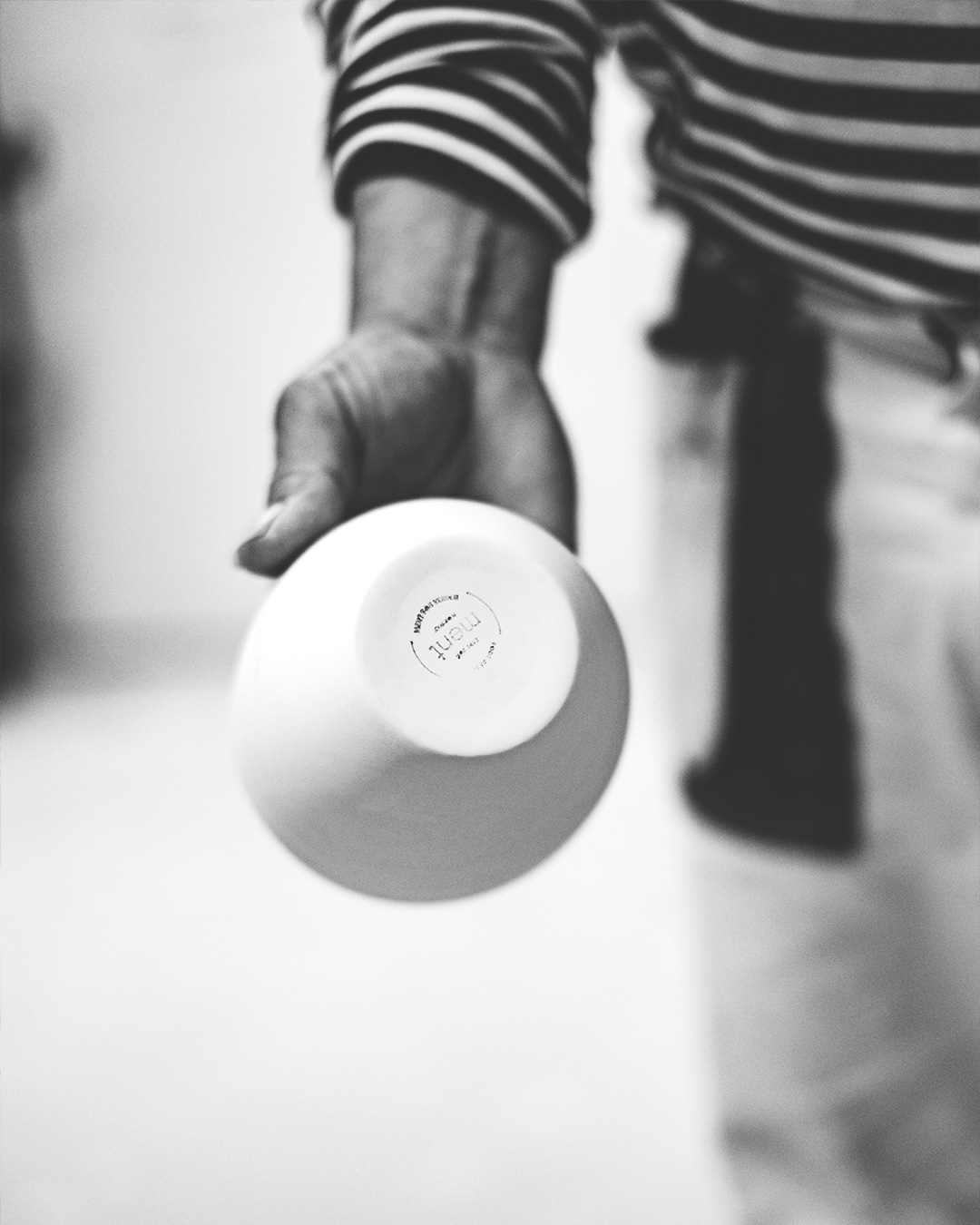
The product is ready for the first firing, which is called a bisque fire. The oven slowly heats up to approx. 1000 degrees and slowly cools down again. Burning takes approx. 24 hours. Now the product is hard and just porous enough for the glaze to adhere well and penetrate the goods. In our factory, we have eight ovens that run around the clock. After the raw fire, the product is ready for another quality control with polishing and correction. Each individual product is then stamped with the ment logo.
BISQUE FIRE
The product is ready for the first firing, which is called a bisque fire. The oven slowly heats up to approx. 1000 degrees and slowly cools down again. Burning takes approx. 24 hours. Now the product is hard and just porous enough for the glaze to adhere well and penetrate the goods. In our factory, we have eight ovens that run around the clock. After the raw fire, the product is ready for another quality control with polishing and correction. Each individual product is then stamped with the ment logo.
GLAZING
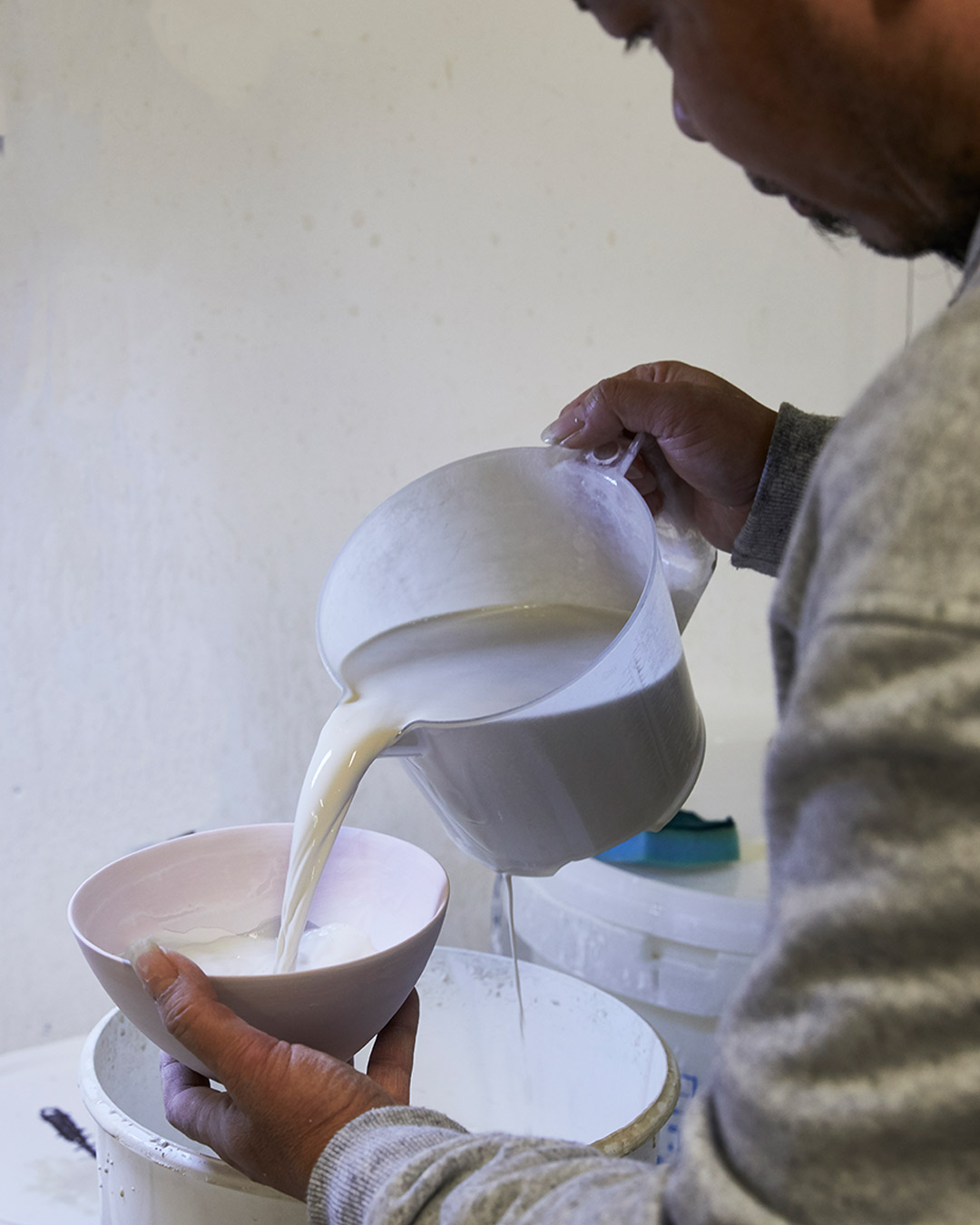
Since we mix color in the porcelain mass itself, we only use transparent glaze on our products. We apply glaze either by dipping the product, pouring glaze on or applying with a brush. The glaze dries quickly and settles like a powder layer on the surface.
Many of our products have partially unglazed surfaces, which we think gives them a special quality. It also makes the task extra challenging. Glazing is a task that requires speed and a lot of training.
GLAZING
Since we mix color in the porcelain mass itself, we only use transparent glaze on our products. We apply glaze either by dipping the product, pouring glaze on or applying with a brush. The glaze dries quickly and settles like a powder layer on the surface.
Many of our products have partially unglazed surfaces, which we think gives them a special quality. It also makes the task extra challenging. Glazing is a task that requires speed and a lot of training.
GLAZING FIRE
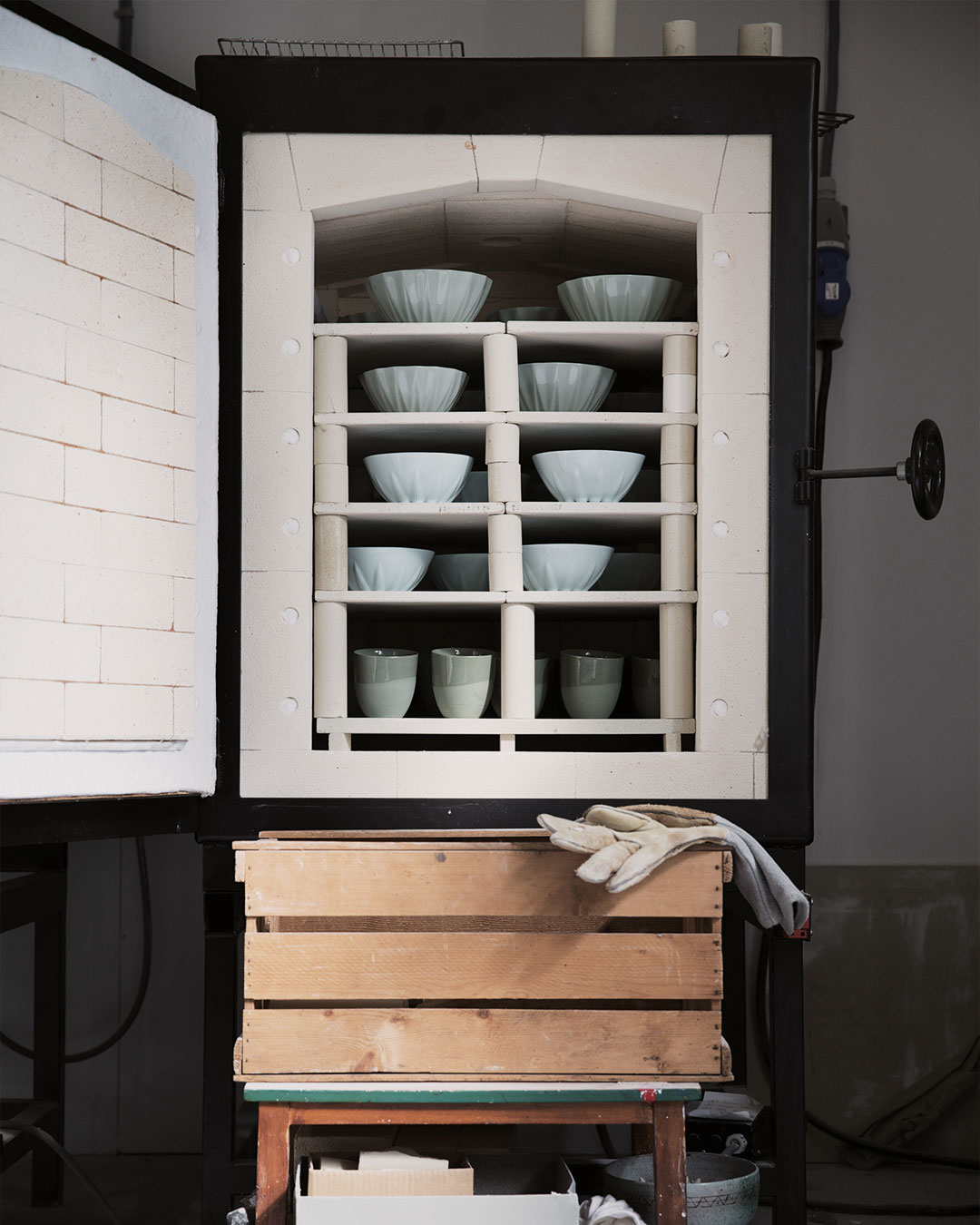
After stamping and glazing, it is ready for the second firing. The location of the items in the oven, distances to the heat sources and temperature jumps must be taken into account. Even a temperature difference of a few degrees can have consequences for the final result. This particularly affects the colour, which takes on slightly different shades due to placement in the kilns during the glaze fire. Porcelain and glaze sinter during firing – i.e. fuse together and the product becomes strong and waterproof.
GLAZING FIRE
After stamping and glazing, it is ready for the second firing. The location of the items in the oven, distances to the heat sources and temperature jumps must be taken into account. Even a temperature difference of a few degrees can have consequences for the final result. This particularly affects the colour, which takes on slightly different shades due to placement in the kilns during the glaze fire. Porcelain and glaze sinter during firing – i.e. fuse together and the product becomes strong and waterproof.
HIGH TEMPERATURE
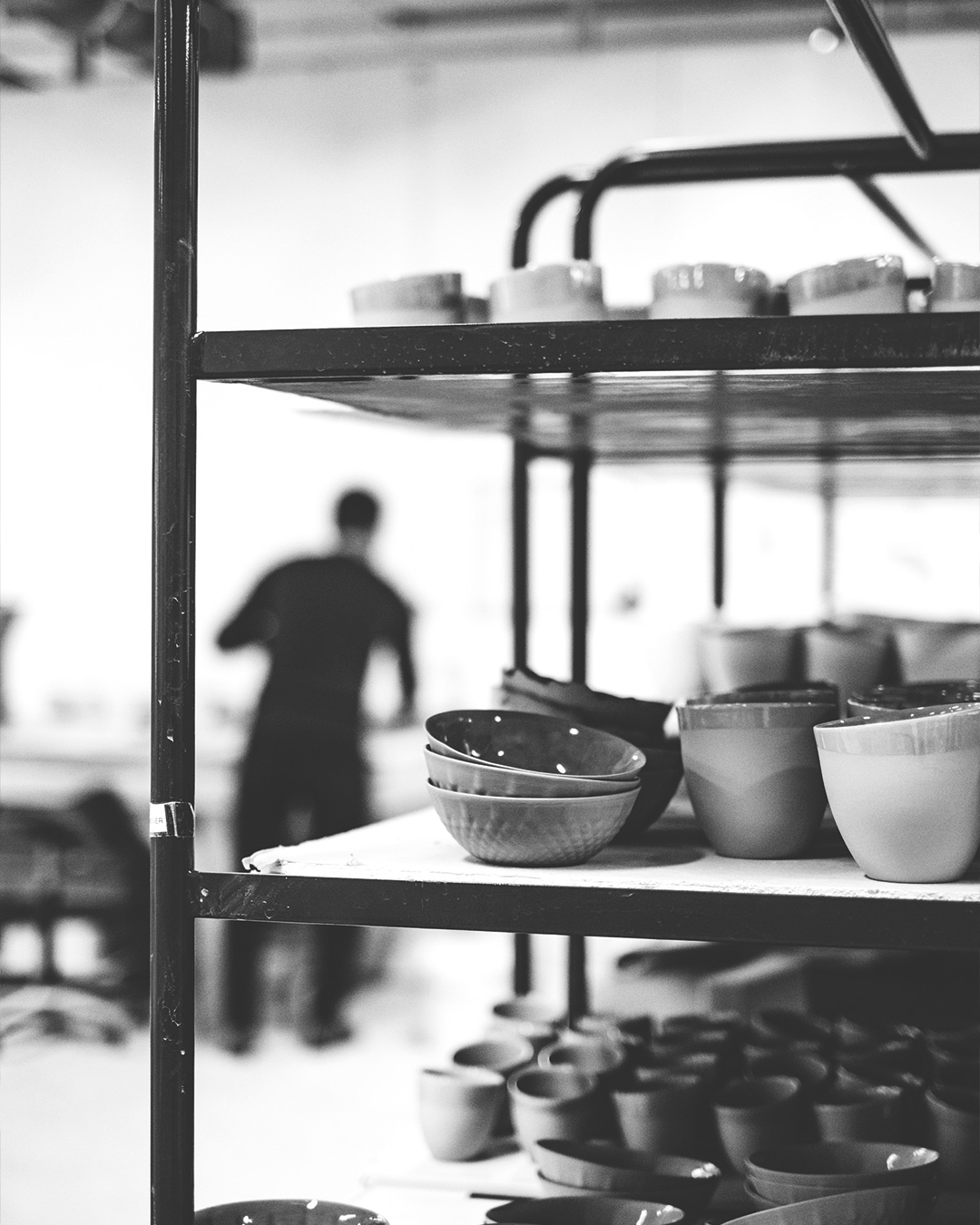
Our glaze fire has a temperature of 1270 degrees, this takes approx. 28 hours when the ovens must cool down slowly. Now the products have their proper appearance, color and size. During the production process, the products shrink by as much as 12%. High temperature is an important factor for the quality of the products. That is why we have chosen to burn at a high temperature, so that the products are solid and dishwasher safe.
HIGH TEMPERATURE
Our glaze fire has a temperature of 1270 degrees, this takes about 28 hours as the kilns have to cool down slowly. Now the products have the right appearance, colour and size.
Throughout the production process, the products shrink as much as 12%. High temperature is an important factor for the quality of the products. That is why we have chosen to fire at high temperature, so that the products are solid and dishwasher safe.
QUALITY CONTROL
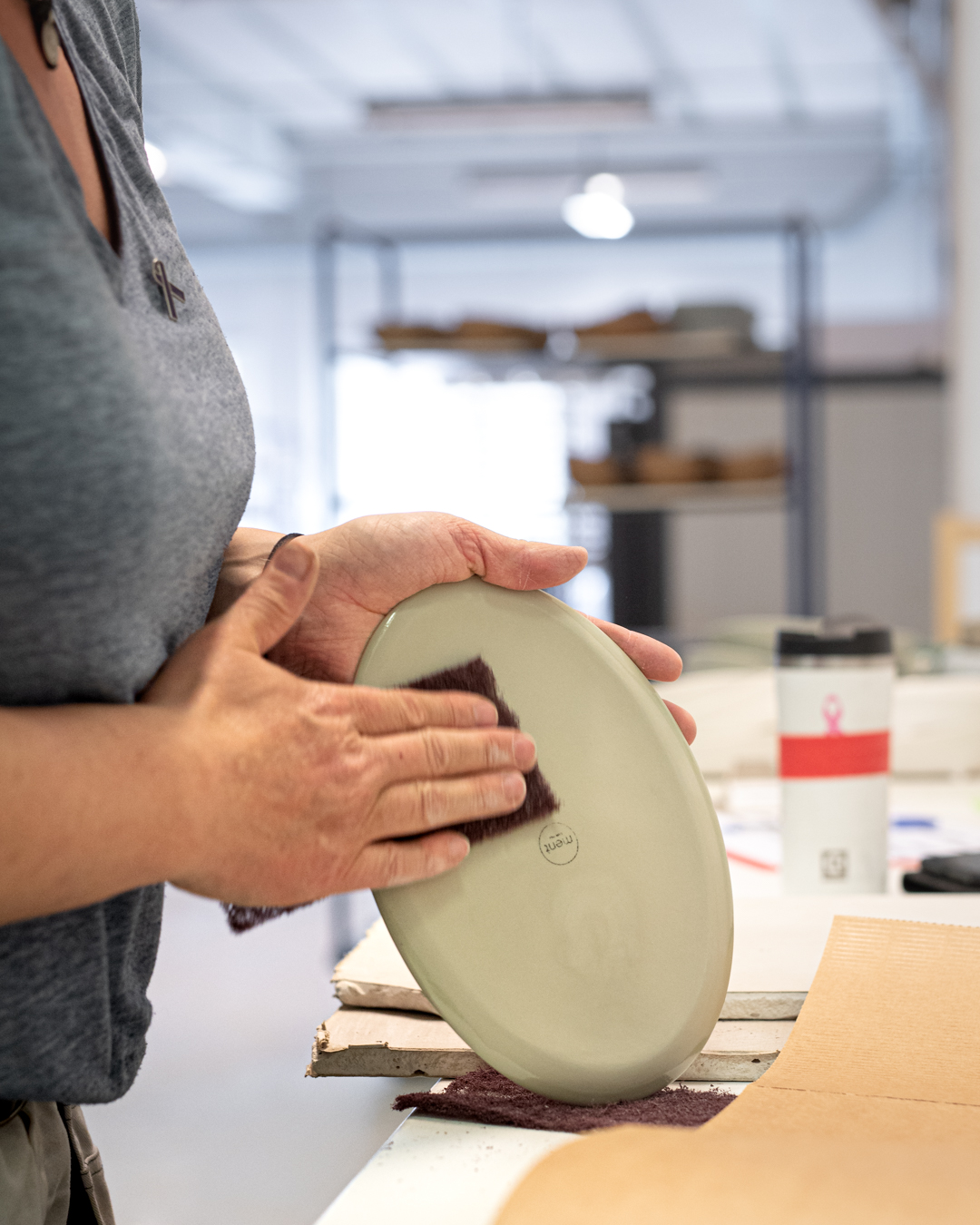
Each individual item undergoes four quality checks from casting to finished product. The last step in the process is the polishing table, where all unglazed surfaces are polished with sandpaper and water so that they become "soft" to the touch. Each product undergoes the last quality check and we sort out any product defects. Our production process is manual and hands are our most important tool. This means that you will never find two products that are 100% the same.
QUALITY CONTROL
Each piece undergoes four quality checks from casting to finished product. The final step in the process is the sanding table, where all unglazed surfaces are sanded with sandpaper and water to make them "soft" to the touch. Each product undergoes final quality control and we sort out any product defects.
Our production process is manual and hands are our most important tool. This means that you will never find two products that are 100% the same.
LITTLE WASTE
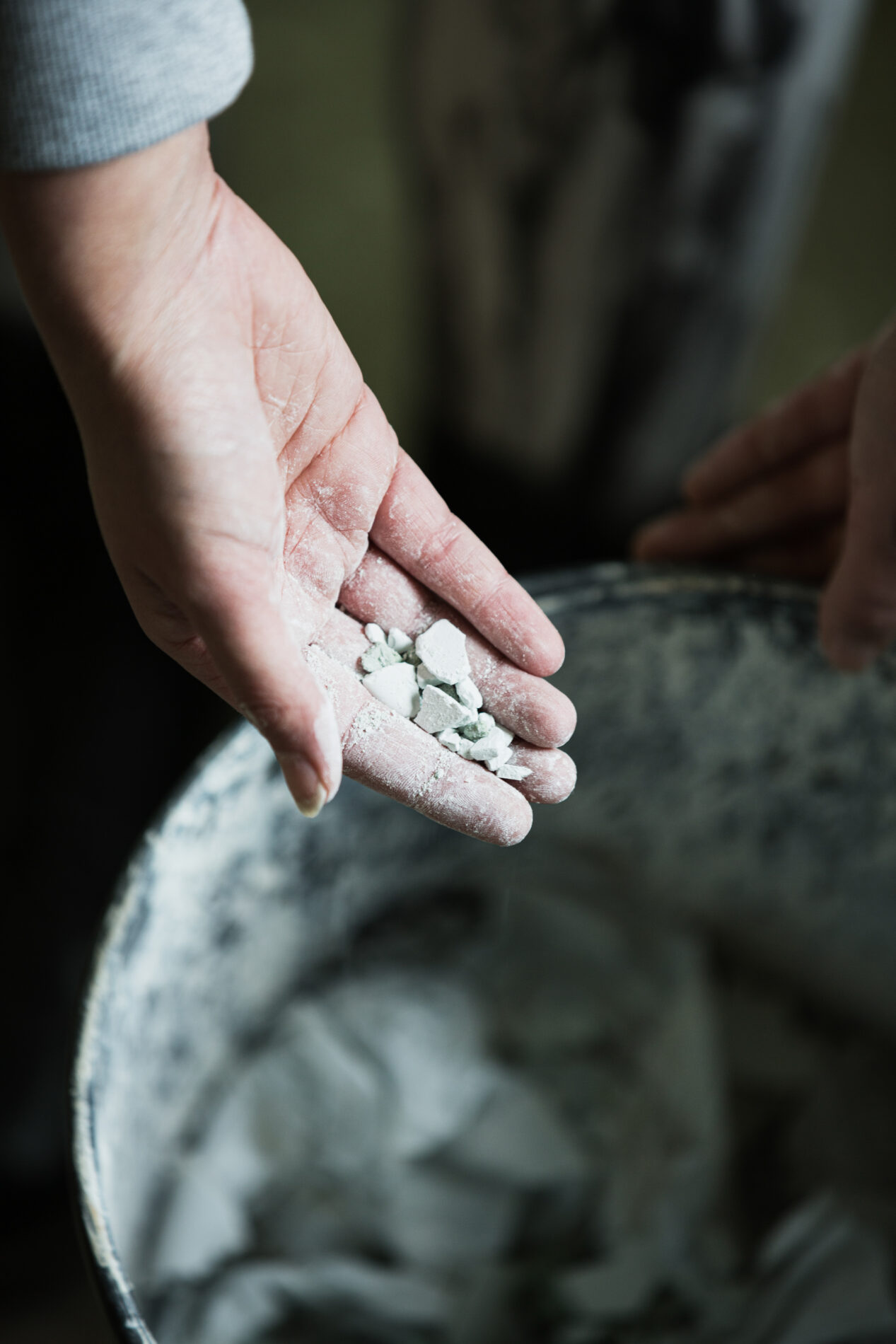
We have a strong focus on reducing wastage in production and are continuously working on ways to reduce wastage. Through many quality checks, we can stop the products early in the process and reuse the material.
In collaboration with external resources, including SINTEF, we have implemented a process where we enter our entire value chain to develop sustainable solutions. This is extensive work, but for us this is our most important investment and contribution to the green shift.
LITTLE WASTE
We have a strong focus on reducing wastage in production and are continuously working on ways to reduce wastage. Through many quality checks, we can stop the products early in the process and reuse the material.
In collaboration with external resources, including SINTEF, we have implemented a process where we enter our entire value chain to develop sustainable solutions. This is extensive work, but for us this is our most important investment and contribution to the green shift.
We are committed to a sustainable future
Ment has undertaken to report annually on the ten principles of the UN Global Compact, the world's largest business initiative under the auspices of the UN for sustainable business. The UN Global Compact's principles and our prioritized sustainability goals give us clear and binding guidance for our sustainability work,
- work that we see as a driving force to develop our commercial and responsible business.
We are committed to a sustainable future
Ment has undertaken to report annually on the ten principles of the UN Global Compact, the world's largest business initiative under the auspices of the UN for sustainable business. The UN Global Compact's principles and our prioritized sustainability goals give us clear and binding guidance for our sustainability work,
- work that we see as a driving force to develop our commercial and responsible business.